
A Playbook for Nonprofits Facing Revenue Adversity in 2026
Before You Begin
This playbook is designed to help nonprofit leaders and boards make sound financial and strategic decisions during periods of revenue disruption and uncertainty.
It reflects the real-world practices nonprofit leaders use when familiar conditions shift whether due to policy changes, funding volatility, rising demand, or broader economic forces. Rather than offering a single “right” answer, the playbook provides a structured way to assess risk, clarify options, and choose a path that fits your organization’s mission, capacity, and financial runway.
How to Use This Playbook
- Read it as a guided framework, not a checklist to complete all at once
- Use it with a small leadership or crisis-response team
- Return to it over time as conditions, information, and assumptions change
Throughout the playbook, you’ll find links to tools and short articles that expand on specific steps. These attachments are meant to support discussion and decision-making, not add complexity.
Use this playbook as a working guide—move through it at your own pace, revisit sections as conditions change, and focus on the steps most relevant to your organization right now.
Why are US nonprofits so impactful and resilient, often punching above their financial weight? Nonprofits are established with the idea that they represent a collective longing — for art, or community health, or shared abundance. Though cash remains crucial — how we accumulate and use it, and how it lends weight, capacity, and functionality to our missions — the element of purpose brings with it an awareness of the kind of social capital that can be used to enlarge, sustain, or protect our work.
This social capital may be accessed through constituents and stakeholders as well as through “friends” and organizational partners. In fact, many nonprofit leaders are highly adept in facing moments when a previous norm gives way to chaos, uncertainty, and the need to rapidly but thoughtfully reorganize — even to the extent of changing form if need be.
Nonprofit financial management is nothing if not complex and sensitive to its environment. This playbook and the attached tools are a tribute to that extraordinary adaptive capacity, providing a list of steps and processes to inform and guide nonprofit leaders and boards at this moment. We have listened carefully and watched over decades as nonprofits of every stripe and size have faced catastrophic changes, and here we have tried to document the steps often taken.
These chronologically organized steps are offered as practice reminders to seasoned leaders and as guidance or reminders for newer ones. That said, they will look a little different depending on the situation, and as time goes on, we will see untold new practice ways emerge.
What Strong Nonprofit Leaders Do When Faced With Immediate Disruption
Prepare for the task ahead:
- Develop a credible and knowledgeable team to do research and guide the process and collaboration with the board. Not to be confused with an executive committee, this is a working team, often made up of a cross-section of leaders from staff and board who can help collect, analyze, and strategize around emerging information. See article linked here.
- Reconnect and strengthen social capital relationships. Make sure the emergent information you are getting is current and credible, and that your relationships are built on shared understandings and priorities. See short article for more.
- Broaden your thinking by reviewing the menu of strategic actions for recalibrating your organization’s future. See linked list.
Assess current particulars:
- Create a graphic of your revenue sources over the last five years, showing percentages and identifying strengths and trends. Gauge likelihood of success in that revenue area against cost and loss. See linked article.
- Identify your business model and its characteristics. See linked article.
- Review your “market,” including needs and interests of constituents, collaborators and competitors; organizations that should be benchmarked; and emergent funding sources, if any. This activity should be ongoing and designed to engage supporters in design and implementation of future focus while meeting emergent needs early.
- Identify your level and sources of risk in the environment. See the attached article and tool on determining level of risk for a starting point. See linked article and tool below.
- Perform a cost center mission/impact analysis. This will let you comprehend how your programs contribute to mission impact and financial margin. See linked tool.
- Calculate your liquid reserves and run as-is cash flow projections to understand the financial runway. See linked resources.
Identify future possibilities:
- Review your possible options for the future. Eliminate the least promising ones (no indicators or track record, potential for insufficient capital or runway) and keep the best overall strategies.
The “Screens” of This Framework
This method uses three screens to examine the strategic prospects of a particular nonprofit. The first screen is the business model of the organization, and the second is its policy and funding context. The final screen is its financial runway for making necessary changes. This playbook is a tool built in and for a moment where federal retrenchment has not only had direct effects on nonprofits but has also shifted other environmental forces in response to it.
The first screen, the business model, provides a scan of the characteristics, capacities, and vulnerabilities of the nonprofit itself. These attributes are often tendencies shared across larger fields will affect the agility of the nonprofit in a few ways. Thankfully, there are only five basic business models (defined here through primary revenue stream), albeit with many variations.
The second screen, the policy and funding environment, shows the forces affecting the operation of the nonprofit in the present moment. These include the direct effects of federal funding cuts, delays, freezes and “compliance” demands — at least for federally funded nonprofits. They may also include other impacts on the operating environment of those organizations, like SNAP and cuts to Medicaid and Medicare cuts, with massive implications for levels of need and ability to self-pay for care. Some of these are still unsettled, in that they are being legally and politically tested, but the whole creates a complicated tangle that nonprofits must take the measure of and strategize around.
Even nonprofits that are not federally funded are also experiencing various degrees of revenue uncertainty as private money is stretched to address federal defunding or other effects of the administration on vulnerable populations. For instance, NFC has, in response to queries, heard that many nonprofits are experiencing disruptions in philanthropic flows from foundations. These effects are hard to track in real time, but we credit our vigilant nonprofit leaders with the insight to recognize problems as they occur.
Making decision-making more difficult is the fact that many of the effects of retrenchment have not yet come to a clear conclusion, and so organizations must be continuously measuring the odds and the timing of one thing or another coming to fruition.
Uncertainty: The Enemy of Timely Decision-Making… Unless It Can Be Embraced
Therefore, the issue of time and space becomes paramount, and this can be understood through the estimation of the financial “runway” available to the organization to take up the strategies it chooses. The length of that runway will be affected by the unrestricted or convertible money on hand, the uses you have planned for it, and the degree to which that pot can be reasonably expanded to allow for building the change you envision. Generally, the shorter the runway, the fewer the strategic options.
The method we lay out here in questions and options is essentially the method many seasoned leaders use to make decisions about strategic direction in the context of the financial/political environment. Of course, those same leaders are then responsible for engaging the board and other stakeholders in informing and ratifying that direction.
Addenda Hub
- Addendum #1: The Team We Need
- Addendum #2: Checking In and Reactivating Your Social Capital Accounts
- Addendum #3: A Menu of Options and Actions
- Addendum #4: Using Visual Aids to Set and Track Revenue
- Addendum #5: Revenue Strategy in 2026 — Using a Business Model Lens When Considering a Strategy Shift
- Not applicable
- Addendum #7: Financial Risk Assessment — A 3-Level Model for Nonprofits
- Addendum #8: Understand How Your Programs Continue to the Impact and Financial Viability of the Organization
- Addendum #9: Calculating Your Financial Runway
Addendum #1: The Team We Need
Many nonprofits, when faced with crises that promise to disrupt finances over time, will put together an emergency response team. This team is charged with gathering and analyzing the implications of information and either making recommendations to the board for ratification or making moves as the board’s delegated body. In many cases, this team will be made up of staff and board members with knowledge of the workings of the organization’s business model. Some organizations may have others on the team who would be helpful to include, like a contracted CPA or a former board or staff member. This team need not exceed six to eight members, and it might be even smaller so long as it consults with others as needed.
Immediate Strategy Scoping Questions for Teams to Consider
- What forces have created or are likely to create a change with likely material consequences?
- Is our whole field similarly at risk, or just our organization?
- Are the operating circumstances changed for the foreseeable future, or might they change again in response to a legal or political shift?
- How much of a cash runway do we have to invest in chosen strategies? Over what period might we expect to exhaust that money at our current burn rate? How might we slow that pace down or expand the pot?
- What has our organization done successfully in the past to manage over similar circumstances?
- What are our regular partners doing that we might take into consideration?
- What are others in our field of practice doing that we can learn from?
- What are others in our field doing that we can join in?
- What will our stakeholders invest in, and over what period?
By Ruth McCambridge, Nonprofit Financial Commons
For many nonprofits, as they head into a crisis moment, one of the first steps they take is to connect with their networks. Such connections are made as a preliminary step to activate any number of resource flows — with the expectation that such flows are often reciprocal.
Among the resources one might need:
- Timely information: For an organization to navigate a turbulent period with some measure of foresight and advice, it needs sources who are active in gathering and disseminating information. This might include updates on policy and funding issues, but it’s also likely to include guidance on approaches the organization can take, up to and including legal remedies. During the first months of the pandemic, for instance, you needed to track an enormous number of issues just to comply with state and local edicts, not to mention the full range of available resources — including financial supports — as they evolved. Different networks naturally provide information from different realms, so you have to look to your own field, geography, and community to know where to reactivate relationships. And remember, those relationships will be at their fullest when they are active and reciprocal.
- Public support to influence decision-makers: If you are a community-based nonprofit, you’re likely to need public support as you argue for what you need to meet the crisis head-on. First and foremost, this support should include those in whose name you do business, ensuring that your focus in assessing priorities is in the right places. But many organizations also have influential friends who can advocate on their behalf and can recognize when a pivotal moment to act may be approaching. Remember, these flows are reciprocal; try to be not a passive partner but active in meeting the needs of the other.
- Partnership potential:When in crisis, the work of nonprofits can feel overwhelming. There are moving targets in funding and policy that must be attended to, and the needs of constituents can rise precipitously during such moments. It’s times like these when you greatly benefit from a history of integrity in meeting those needs when it comes to potential partners. Prior demonstrations of generous and trust-based behavior from your organization allow for the kinds of organic pairings that can respond to heightened need quickly. And such pairings provide not only impressive capacity, but scads of additional information and insight.
One Final Point
Social capital eventually converts to financial capital if it is well deployed and managed. Reputations are often made during crises, and others — including funders — note who stepped up to help the field or community find the path forward. The great thing about social capital is that it doesn’t lessen in worth but grows in value as you spend it.
Addendum #3: A Menu of Options and Actions
You will probably use more than one of the options below, but you should make your choice wisely, with a full sense of a reasonable timeline and financial runway. For instance, you may wish to combine building on a second revenue source with a strategic editing of programs to limit the loss of resources. The options in Group 5 are worth considering in every plan.
Make sure you look at timelines on each option considering where you are starting and what is needed to accomplish the task; for instance, changing the primary source of income often takes longer than dissolution of the organization unless you are reducing your budget significantly.
1. Lost revenue replacement
- Building out the primary revenue source
- Building on a secondary revenue source
- Initiating a largely new revenue stream
- Most extreme — changing the business model/primary source of revenue
2. Restructuring
- Revisiting programming
- Changing a program design to reduce its costs
- Suspending a program with the intention of potentially restarting in the future
- Adding programs to deliver on mission in a new way
- Narrowing access to beneficiaries
- Closing one or more programs permanently
- Transferring programmatic assets to another organization
- Revisiting organizational structure
- Downsizing administrative costs
- Exploring external restructuring such as coalition engagement, strategic partnership, merger, or acquisition
- Most extreme — dissolution of organization
3. Riding it out
- Improving on base business transactions and compliance
- Suspension of program
- Solidifying or expanding market
- Careful monitoring for threats
- Wise accumulation and use of reserves
- Most extreme — counter-cyclical growth
4. Adapting the operating environment to support our agenda
- Changing the public narrative
- Influencing decision makers to think/operate differently
- Creating political consequences through collective action and advocacy
5. Creating an environment in which stakeholders powerfully support direction
- Who do we need to consult with?
- Who do we need to inform?
- Who do we need to influence?
- Who do we need to join forces with?
Addendum #4: Using Visual Aids to Set and Track Revenue Restructuring
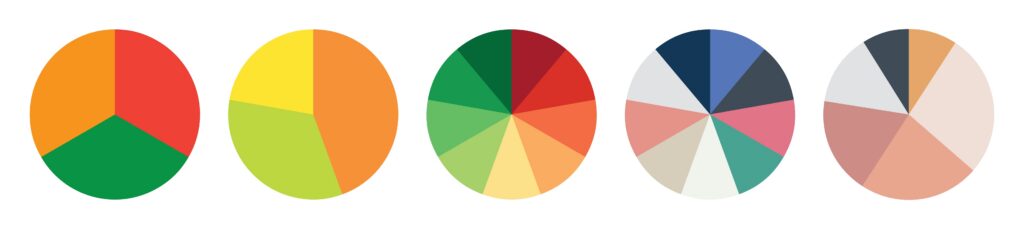
Particular fields of work tend to be dominated by one “natural match” in terms of revenue. This, then, drives the bulk of the business model. Many nonprofits, of course, will have important secondary and tertiary sources, but designing diversity into the budget for its own sake is less important than figuring out where your strengths and weaknesses are and what kinds of revenue are possible, cost- and energy-effective, and non-restrictive to your purpose. That inquiry is generally done by examining what others have done to supplement your field’s natural match, as well as your organizational revenue histories. and considering what you need in your revenue mix —unrestricted income, for instance, or a revenue stream that builds social capital at the same time it builds financial capital.
Here are two examples of intentional work on revenue mix in two very different organizations, illustrated by graphs. We suggest that readers put their own illustrated revenue stories together to help build collective understanding of what may need to happen next.
Coastal Family Health Center
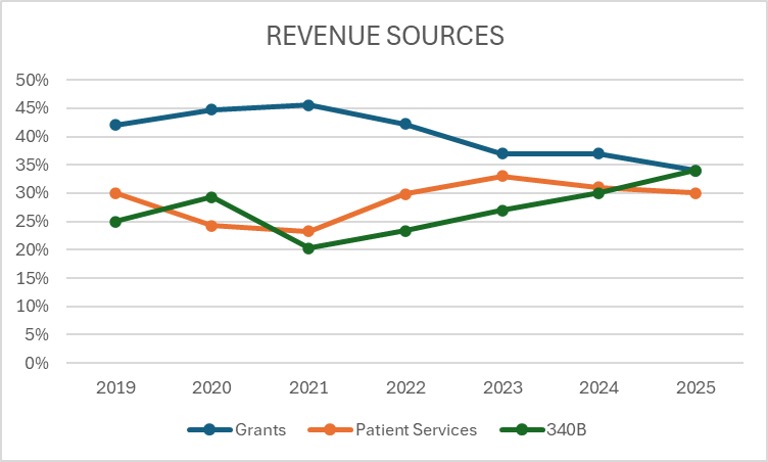
These graphs reflect carefully crafted strategies to shockproof the organization and keep it relevant and growing despite the changing winds of public funding in health care. They clearly show the progress the organization has made to goal over time.
The Coastal Family Health Center (CFHC) decided around ten years ago that it wanted to reduce its reliance on any one revenue source — in particular, on direct grants from the federal government — so it looked to create a more equalized mix between grants, patient fees, and the pharmacy program (340B). Note that these changes were backed by a strategic plan that allowed for a runway sufficient to the task.
They also wanted to diversify the payer mix more broadly, and they managed to move that needle as well.
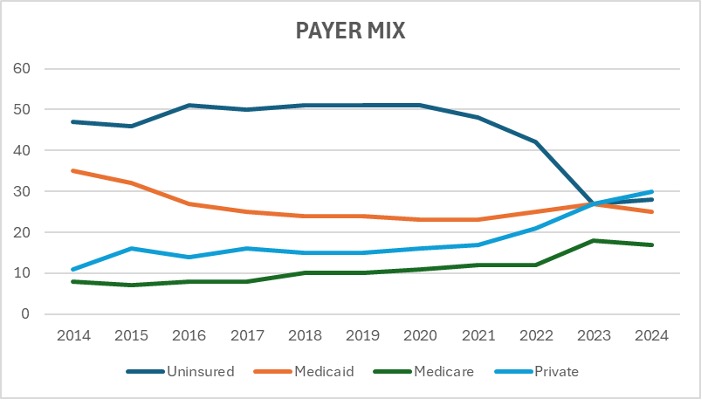
This has allowed CFHC to move into this period of turbulence in federal health care policy with more equanimity than would otherwise have been the case.
Minnesota Fringe Festival
The picture is different in scale but not intensity at the Minnesota Fringe Festival (MFF). After a few years of adjusting to the lingering market effects of the pandemic, MFF lost federal grants for 2026 and had to move fast to at least partly fill the hole in its relatively modest budget. This led to board/staff discussions regarding the leverage points in its business model.
MFF executive director Dawn Bentley suggests asking the question about which revenue sources could be the “low-hanging fruit” for the most immediate impact, which is one of the reasons they chose to “aggressively increase [their] individual donor income even though that had not been a significant percentage of revenue in the past.”
“Our organizational challenge is that participants in our programs do not understand our business model,” Bentley says. “They assume that purchasing a ticket to an event constitutes supporting the organization. However, ticket money is passed through directly to artists.”
This makes the artists that participate in the MFF stakeholders with a strong investment. They’re also highly creative, and that makes them a strong part of the organization’s social capital. As we have said elsewhere, social capital can be converted into financial capital when the time is ripe — and this year it was.
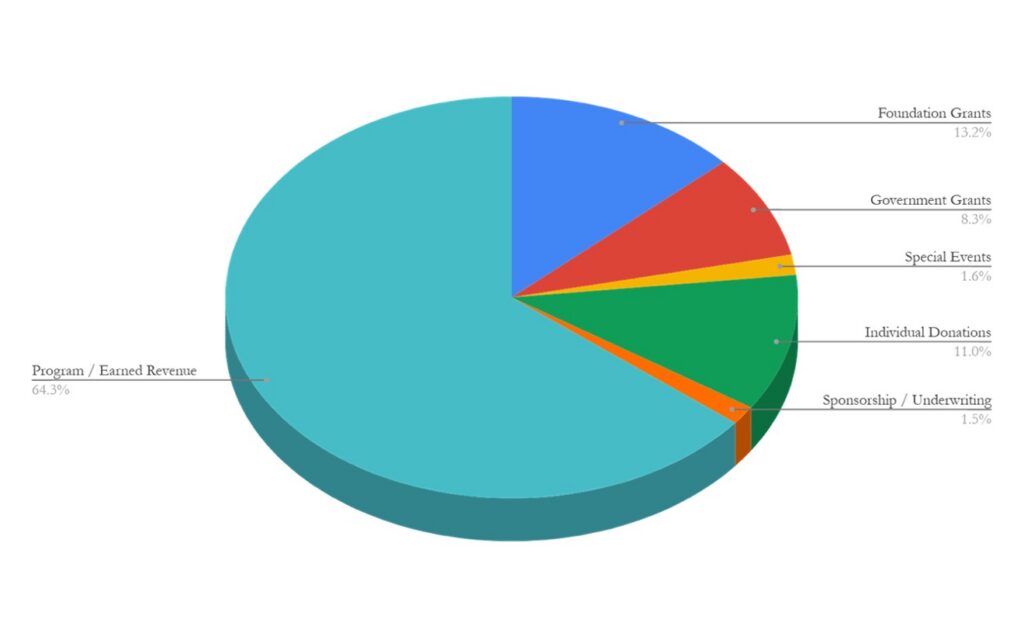
This is what MFF’s original revenue plan was for this fiscal year:
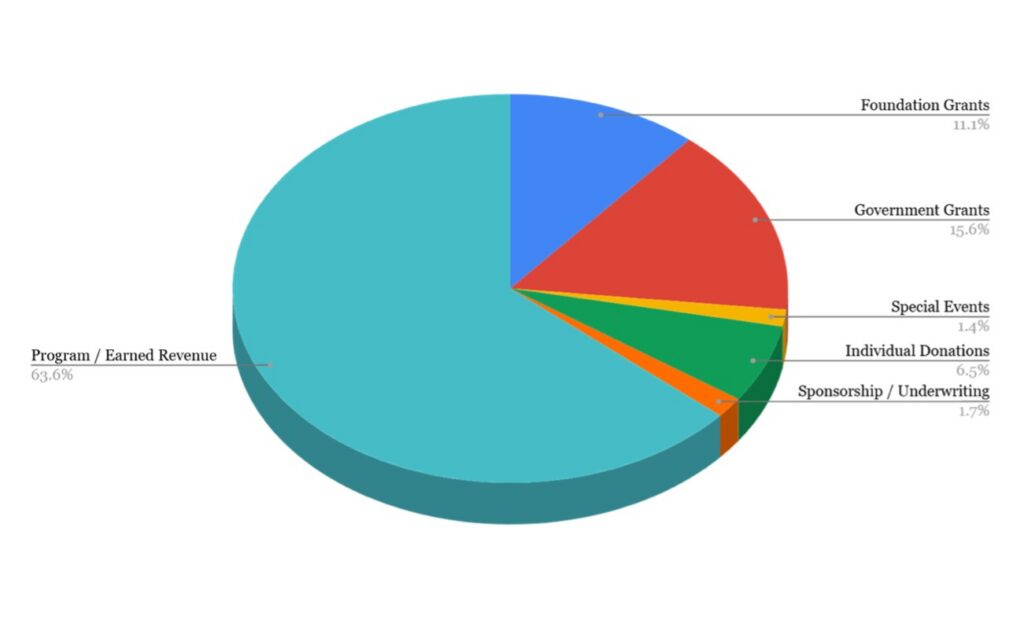
But federal cuts resulted in a $60,000 shortfall in the second-highest category of government grants, so the organization, to preserve its reserves, had to find a strategy they could implement fairly quickly. MFF chose the route of appealing to the artists who depend upon the festival to help via raising money through their own appeals and private events for friends. The result was an increase of private donations, as can be seen below.
It is early days yet for this strategy, and it will need other augmentations.
“I would also argue for an understanding of programmatic business cycles to clarify how long one must wait to measure success,” says Bentley. “As a festival, changes made in the fall may not be fully realized until the following summer. This is also an argument for augmenting our largest program (the festival) with smaller, year-round, activity (such as access equipment rental to small theaters or fiscal sponsorship to theater makers). This also impacts our financial ‘runway’ available. Since the festival cycle is so long, we are most comfortable having six months of operating expenses as a prudent reserve, which may exceed the needs of other organizations running a shorter cycle.”
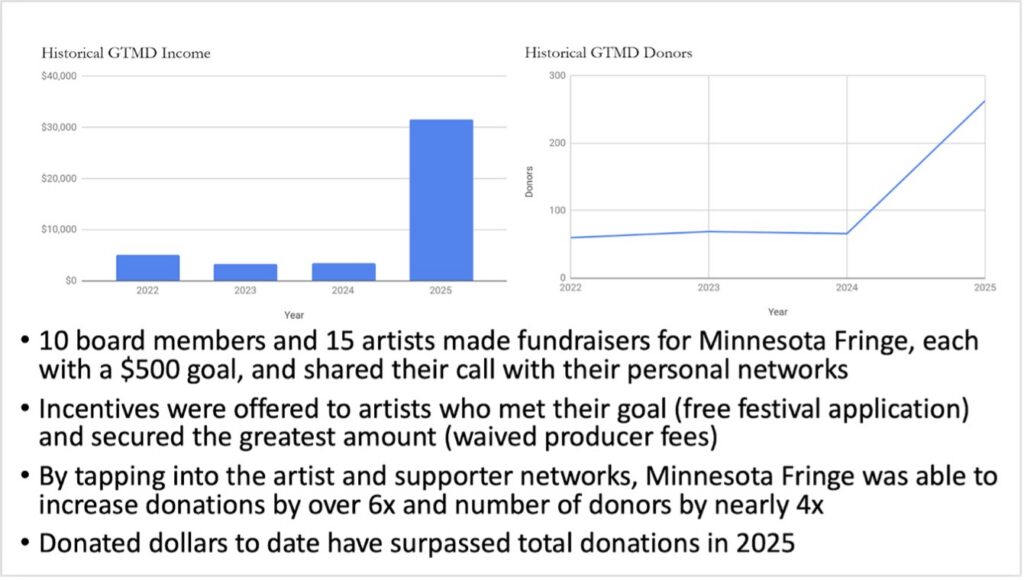
These two stories are meant to exhibit how graphs help organizations both to set goals and measure success over time. There are a variety of ways to show visually what is going on in your budget, and these should be used to inform strategies and set goals and timelines.
Addendum #5:
Revenue Strategy in 2026: Using a Business Model Lens When Considering a Strategy Shift
By Hilda Polanco, Practice Leader, BDO Nonprofit & Grantmaker Advisory, and Sarah Walker, Managing Director, BDO Nonprofit & Grantmaker Advisory
Nonprofits, like for-profit organizations, can operate with a variety of different financial structures, and understanding what drives them is essential in good times and bad. In this article, we have chosen to categorize business models by revenue type because a nonprofit’s primary revenue source dictates to a great degree any number of other characteristics. These characteristics include leadership profile and capacity, administrative infrastructure, the transactions required to convert programmatic activity to income, and the degree of risk the organization runs when the external environment changes. These models and their characteristics can inform how an organization monitors its progress and assesses its financial health. A given business model can determine what constitutes an organization’s “authorizing” environment both in financial and compliance terms. The nature and preferences of the authorizing or dominant revenue source have profound effects on what nonprofits must and can do to survive or change course.
While a few nonprofits rely exclusively on a single type of funding, most have one predominant revenue stream that largely drives their characteristics for success. We see five basic categories of business models among nonprofits, which for a given nonprofit should be analyzed in order of the proportionate ratio of dollars in play:
- Individual donation–funded
- Foundation-funded
- Government-funded
- Fee-based
- Membership-funded
There are some complicating factors to consider given such simple categorization, such as the blocks of private fees originally made available and regulated by government, the overlap between many individually funded nonprofits and membership organizations, and the transitional state of organizations that are working to move from a reliance on philanthropic funding to government contracts as they scale. While these nuances require that leaders discern where complications may lie and address them, these five broad categories are effective as a guiding framework.
Additionally, some types of revenue models tend to predominate in certain fields of practice over others. For example, advocacy and organizing groups are often primarily foundation funded, while performing arts organizations tend to rely on fees from ticket sales. Community action agencies and human services organizations have models supported largely by government grants and contracts, while some nonprofits focused on generating funding for international relief and first responders tend to depend upon small individual donations. These variations by field and subsector create recognizable patterns of staffing, revenue producing transactions, and a host of other variables — which makes for the ability to discern elements of a working model for purposes of benchmarking. Bridgespan has referenced this tendency toward sameness in revenue models within certain fields in its research on how nonprofits grow really big. This same research also emphasizes that organizations that have been the most successful in scaling their operations almost always pursue a dominant revenue source that is a “natural match” for the organization. That said, there is no particular value placed by these authors on larger organizations.
Still, the “naturalness” of a particular match — that is, how a particular source of income syncs up with the nature of an organization’s mission, activities, and constituents — may make certain revenue replacement strategies more difficult. Transitioning revenue sources for a government-funded community health organization, for example, to rely on individual donations as a key source of revenue is no easy task. Replacement or supplementation of one primary stream of revenue with another revenue type at any significant level generally requires extended infrastructure building — involving money, leadership energy and attention, and other forms of capital. For a nonprofit embarking on this path, understanding the feasibility of the proposed model, as well as the runway available to make it happen, is critical.
What follows is a view into the five nonprofit business models referred above and the characteristics of each that may impact the prospects for change in the near and far future.
SOURCE | SENSITIVITIES, RISKS & CHALLENGES | LEADERSHIP CAPACITIES | INFRASTRUCTURE NEEDS | WHO PAYS? |
INDIVIDUAL DONOR |
|
|
|
|
FOUNDATION (“INSTITUTIONAL”) |
|
|
|
|
GOVERNMENT |
|
|
|
|
FEE FOR SERVICE |
|
|
|
|
MEMBERSHIP |
|
|
|
|
If your organization is looking to make a shift to a new revenue stream, look at what capabilities your organization has today. Where does the organization excel given the people, processes, and systems currently in place? Does your primary revenue source mimic the rest of the field? This may make a significant revenue switch harder to achieve as might an internal focus on existing infrastructure needs. Given the mission, activities, and constituents of the organization, what new model would be the most “natural” alternate fit? If the capabilities for that model do not currently exist, what investments will need to be made to build the necessary infrastructure? For example, membership-based nonprofits can effectively manage constituent data, engage and convene large groups, and process a high volume of small payments. Organizations funded by government typically excel in cash flow projections, compliance activities, and grants management.
Use the chart below as a starting point to identify where you have key organizational capabilities.
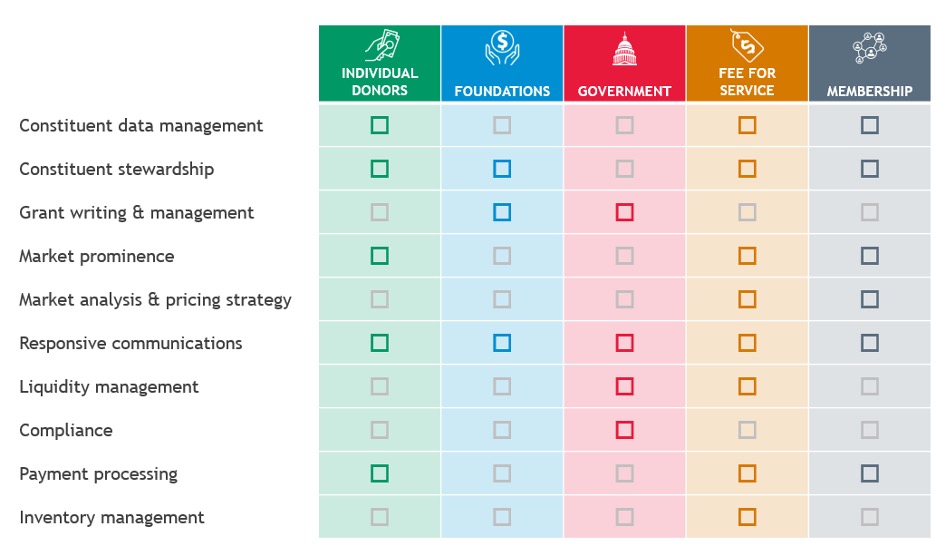
Shifting your revenue strategy may require a different array of staff, implementation of new technology, and/or establishing or redefining processes and priorities. For instance, an organization seeking to develop an earned revenue stream for the first time may need to build competencies around market analysis and pricing as well as implement effective billing and collection systems. If establishing an individual giving program is the goal, efforts may center on raising brand awareness, building donor cultivation and stewardship skills among key staff and board members, and implementing systems to track and manage donor data.
Given the required investment of time and resources, seeing results may take longer than you expect. The length of an organization’s financial runway is therefore an important data point to inform the course of action. Leaders should understand the amount of available liquid reserves, also known as LUNA (Liquid Unrestricted Net Assets), and the time horizon for change. If a funding loss or other disruption looms near, do you have the six months of reserves necessary to ride out the impact? Will those reserves also fund the infrastructure development needed to implement a new funding strategy? If an adequate financial runway doesn’t exist, expansion into a new revenue model may not be the answer. Leaders in this situation may instead choose to head down an alternative path of revised service delivery, right sizing, or collaborative restructuring with a partner organization in order to preserve the delivery of the core mission.
Leaders are confronted with many choices in today’s shifting landscape. If replacing lost revenue is necessary piece of your sustainability plan, understanding the business model — with a focus on the dominant revenue source — can be a starting point to align mission, capabilities, and infrastructure with your evolving revenue strategy.
Addendum #7: Financial Risk Assessment: A 3-Level Model for Nonprofits
As many nonprofit organizations continue to navigate uncertainty, there is an immediate need for leaders to assess their risks and consider how they may respond to likely scenarios. The following risk assessment model is designed to guide nonprofit board of directors and management staff on the work they need to do to organize their financial planning over the next six months to a year.

This framework should serve as a “gut check” on the degree of potential impact the current economic and political environment may have on a nonprofit’s revenue streams and financial health. Instead of requiring exhaustive data inputs, the tool creates a common understanding from which to take action.
Determining Your Financial Risk Profile
It is essential for a nonprofit leader to have a clear understanding of their organization’s business model and the strength of the balance sheet, particularly the availability of operating reserves and cash on hand. Leaders must also understand which funding sources are restricted and any limitations to make budgetary changes.
To assess your organization’s financial risk profile, ask yourself the following questions:
- What are our key revenue drivers?
- Which funding sources are likely to be affected?
- Are revenue decreases anticipated to be minimal, moderate, or severe?
- Are our mission and service areas politically controversial? If so, how might they be at risk?
- If revenue dips, what financial reserves can we draw on to sustain operations?
The answers to these questions should lead you to place your organization in one of the following categories of risk: Minimal Expected Impact, Significant Areas at Risk, and Existential Redefinition.
It’s possible to find yourself quickly moving from one category of risk to the next as new threats, challenges, and areas of uncertainty emerge.
Minimal Expected Impact
Organizations experiencing minimal expected impact can expect to maintain their current operations. These organizations anticipate no changes to their revenue levels or only minor funding decreases from some revenue sources, while other revenue sources hold steady or even increase. These organizations can likely sustain programs in their current configuration or implement only moderate reductions. At this end of the risk spectrum, organizations might focus on minimizing controllable expenses that do not significantly impact staffing or mission, such as negotiating new terms on contracts with service providers or researching new suppliers to engage at better rates.
Significant Areas at Risk
Nonprofits that face moderate to significant funding decreases from one or multiple revenue streams, or see other significant changes like partner program cancellation, will need to consider a business model recalibration. For these organizations, it may be time to wind down one or more programs and shift focus to the delivery of core services. This shift can mean significant reductions to infrastructure and/or staffing. As these changes are likely to have a greater impact on the nonprofit, leaders should be thoughtful in engaging diverse stakeholders in discussions about organizational values and non-negotiables before making any decisions. Leaders of organizations in this category should also have a clear understanding of the financial resources available to them — e.g., Liquid Unrestricted Net Assets (LUNA) or reserves — and how long those reserves can support operations. If the organization has been diligent in setting aside funds for a rainy day, this is the time to tap those resources.
Nonprofits in this category may also want to conduct a deeper analysis to understand if significant cost savings can be realized prior to reducing program services or tapping reserves. There may be back-office solutions that could result in meaningful savings, including outsourcing human resources and finance tasks, moving to a Professional Employer Organization (PEO) to reduce benefits costs, or engaging a Management Service Organization (MSO) to take over all back-office functions.
Existential Redefinition
Organizations facing significant funding decreases from their primary revenue sources or other existential threats to their sustainability may have to pursue an alternative operating model. This could take a variety of forms. Some options include significantly restructuring, suspending, or permanently eliminating programs. In some cases, there may be other organizations that are in a better position to absorb and sustain these programs.
For organizations whose work may be controversial, there is also the option to lean into the controversy with the hope of activating support from donors who might not otherwise be aware of the organization’s mission. This is a high-risk endeavor, however, and should only be undertaken with the full support of stakeholders and care for all who might be affected if support does not materialize.
Organizations facing existential redefinition will likely confront painful compromises that may pit their values against their sustainability. As a result, some leaders may close their organizations and transfer all appropriate assets to another organization or community, which will require a formal approval process. Closure should not be considered failure. It can open new opportunities for the organization in the future. In these cases, organizations should be good stewards of their assets, both tangible and intangible.
The Path Forward
This framework is not meant to guide a “one and done” decision. The nonprofit landscape has always been dynamic, requiring adaptability and creativity. As new challenges emerge, leaders should expect their organizations to move along this risk spectrum either by virtue of outside change or by internal demand. Those who recognize that risk need not be synonymous with threat will be best positioned for capitalizing on new growth opportunities and responding to stakeholder needs when they arise.
While the business models the nonprofit sector has historically employed may be undergoing significant change, understanding your organization’s current financial situation remains critical to determining the path forward. By calibrating plans to your risks, you can make thoughtful decisions about your organization’s strategy with the goal of preserving critical services and cultural enrichment for the communities you serve.
Addendum #8: Understand How Your Programs Continue to Impact the Financial Viability of the Organization
By Steve Zimmerman, Spectrum Nonprofits
An organization’s ability to achieve its mission is deeply interconnected with its financial viability. Programs exist to advance the mission, and every program requires financial resources, directly or indirectly, to realize its potential. These two components — mission impact and financial performance — are inextricably linked and together make up the “dual bottom line” for nonprofits. It is not enough to have one or the other: Financial strength without impact is meaningless and impact without financial strength often comes at the expense of staff, infrastructure, or long-term effectiveness.
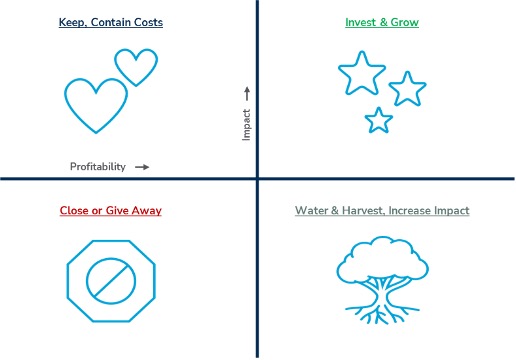
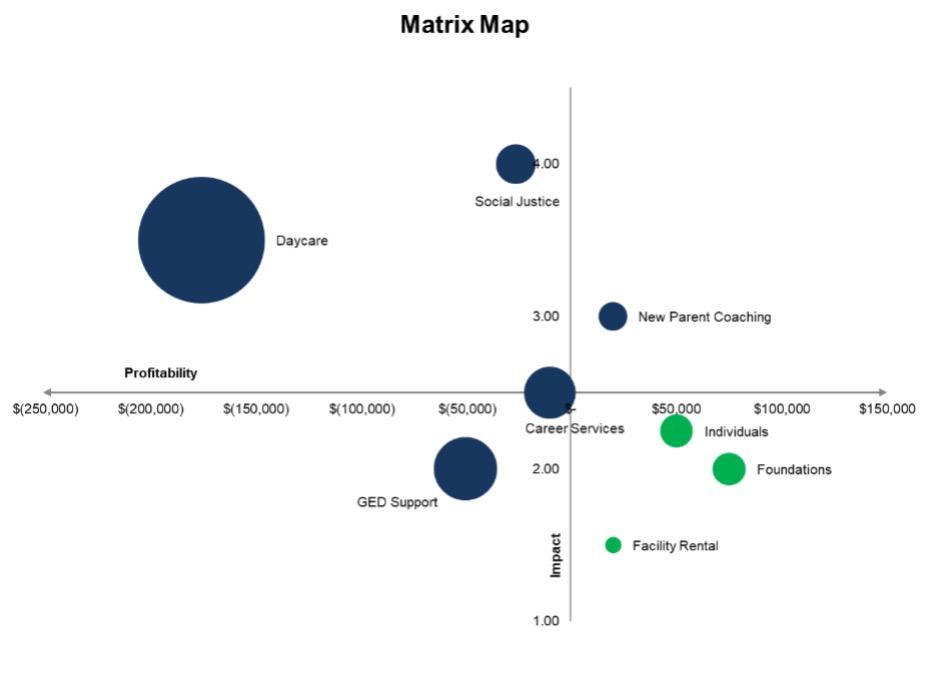
To understand how the programs collectively drive both impact and financial viability, we conduct a mission/money analysis using the matrix map tool. The matrix map provides a visual depiction of each program’s relative contribution to the mission, the resources required to create that impact and its contribution to the organization’s financial position.
Doing the analysis requires four steps:
- Identify programs: For this type of analysis, we want to list every activity an organization engages in, from mission-specific programs to fundraising activities. Fundraising can be listed as one program, though it is often helpful to break it into distinct activities such as individuals, special events, foundations, rentals, fee-for service, etc., as each has different financial structures and returns that may be useful to understand when considering where to invest.
- Assess mission impact:While every program has impact, one thing we know but seldom admit is that not all contribute to the organization’s mission equally. This step involves a candid conversation about how each program contributes to the mission relative to other programs.
- Determine profitability:Program budgets are essential to understanding the true cost of impact, identifying which programs generate resources and which are subsidized by unrestricted funding. Fully allocated true costs (including shared and administrative expenses) are offset by restricted or earned revenue generated by each program to determine profitability. Unrestricted income is attributed to fund development activities.
- Analyze the matrix map: The resulting visual provides an overview of how the programs work together to drive both impact and financial results. The map takes a financial exercise and presents it in an accessible manner, allowing more people to understand the organization. It shows not only where the organization is today but also how the program mix has changed in response to external forces. The map also provides guidance for strengthening the organization by helping leaders see the organization holistically and, using other information gathered, decide the best program mix and investment needed to move forward.
More information and templates are available at www.nonprofitsustainability.org and www.spectrumnonprofit.com.
Addendum #9: Calculating Your Financial Runway
It is important for organizations to develop a sense of the available timeframe to make the changes necessary to right-size or otherwise adapt to a protean future. That said, the length of your runway is something of a moving target, as it may be expanded by an unexpected injection of revenue or foreshortened by an unexpected loss. This means that the runway calculation is not a one-and-done endeavor; it must remain regularly informed by contingencies and reported on to decision-makers.
The basic work of developing the runway is done (1) looking at your reserves and (2) running a detailed cash flow projection. Reserves, also known as LUNA (Liquid Unrestricted Net Assets), indicate the resources an organization has on hand once the illiquid portion of its unrestricted net asset balance is removed. The remaining balance, or operating reserve, is not restricted to be spent on any prescribed activities or within a certain timeframe — and can be quickly converted to cash. In addition to assessing reserves, creating a detailed cash flow projection will enable you to see how many “months” of expenses the cash balance will cover at the current moment and future points in time.
Below are two tools with which to do that — if you don’t currently track these two metrics already.
Cash Flow Template
This template can help you translate your operating budget into a detailed cash flow projection, including expense details over the course of a fiscal year: https://wallacefoundation.org/sites/default/files/2024-05/cash-projections-template.xlsx.
Financial Health Analysis Tool
This data-visualization tool provides a snapshot of your nonprofit’s financial health based on four years of financial data, with a focus on liquidity. In addition to operating results and months of cash on hand, the tool calculates LUNA (Liquid Unrestricted Net Assets), also known as operating reserves: https://wallacefoundation.org/sites/default/files/2024-05/financial-health-analysis.xlsx
Still, we must remind you of the importance of planning around contingent issues so that if you do lose a revenue source and must close a program, you limit any continuing financial call on your cash. Look at long-term contracts like leases and facilities costs to prevent these problems.
In Closing: Review and Select Your Best Options for the Future
As we said earlier, there is no one-size-fits-all strategy for nonprofits facing a crisis that includes ongoing revenue adversity. For each organization, a well-honed plan of action will depend upon context, which includes the policy environments, the business model, and the financial runway. We have also emphasized that other nonprofits in your practice field and the networks that serve them will be especially important in this kind of national phenomenon, providing models for strategic change, a tailored source of information about trends, and colleagues with whom you can advocate in political and legal settings.
Remember:
- This is not necessarily a time for one-and-done decisions as the environment continues to unfold.
- Strong leaders and boards will continuously revisit assumptions and adjust but will hold sacred the mission intentions of the organization and the needs and stated interests of those in whose name they do business.
- Strategies in such times seldom exist within a single organization, and social capital is the nonprofit strategic advantage.
Our Final Call to Action
- → Explore the tools.
- → Share this playbook with your board and executive team: Send them to https://nonprofitfinancials.org/resources/nonprofit-playbook-2026/ or download the PDF version here.
→ Send us your feedback and your stories illustrating any of the points we have made here. That is the only way we can learn as quickly and accurately as needed. Email your responses to the editor.
This playbook is dedicated to the thousands of nonprofits from whose time-tested practice its lessons were derived. Among the many individuals who contributed to this document as writers or readers are Dawn Bentley, Dana Britto, Nancy Fregeau, Angelique Greer, Mark Hager, Ruth McCambridge, Amanda Nelson, Hilda Polanco, Jon Pratt, Sarah Walker, and Steve Zimmerman.
Developed by the Nonprofit GPS. Peer-informed. Practice-tested. Updated for 2026 conditions.

Addendum #2: Checking In and Reactivating Your Social Capital Accounts